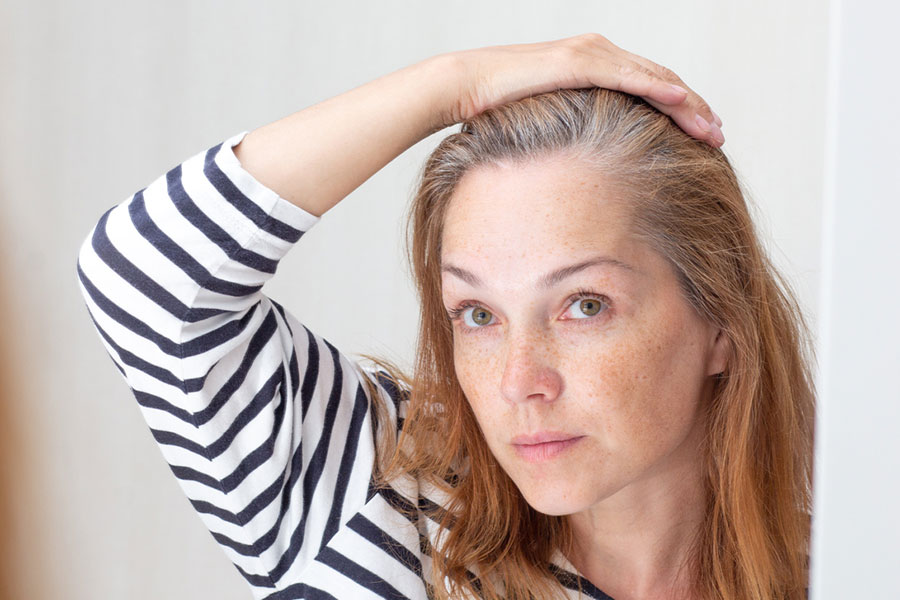
What hair thinning treatments are available for women?
Options for women include PRP, hair follicle transplants, toppers, wigs and extensions, and over-the-counter products. PRP uses your own cells to awaken dormant follicles but does not work in completely bald areas. Transplants move follicles to fill bald spots and can be followed by PRP. Wigs and toppers cover thinning but do not treat the cause.
According to Harvard Health, approximately one-third of women experience hair thinning or hair loss at some point in their lives. This may happen with aging, childbirth, hormonal changes, or any number of other circumstances. If you are dealing with alopecia or female pattern baldness, there are treatments available to help you restore hair thickness and boost your confidence along the way. Check out these hair-thinning treatments for women.
PRP Treatment for Hair Thinning
One of the most effective solutions for hair thinning in women is platelet-rich plasma treatment (PRP). This process uses your body’s own cells to awaken dormant hair follicles. If you have live follicles on your scalp that are no longer producing hair, PRP may be able to keep those follicles productive before they disappear completely.
Note that PRP does not work in areas of complete baldness. If the follicles are missing altogether, there is nothing for the PRP treatment to revitalize. In those situations, we may recommend a follicle treatment before pursuing PRP. For a look at what shapes pricing, see our PRP treatment cost guide.
Hair Follicle Transplants for Bald Spots
Women can get transplants for hair follicles, just like men can. In this case, follicles are pulled from a different area of the body to fill in bald spots on the scalp. Follicle transplant is a more lengthy and more expensive process than PRP, but it may be the only solution in some situations for long-lasting hair regrowth. You can get PRP after a hair transplant for maximum effects.
Toppers, Wigs, and Extensions
In addition to the medical hair thinning treatments available to you, you could consider getting a wig or hair topper to cover your thinning. This will not address the root cause of the thinning, but it may give you the confidence boost you need to feel more like yourself. Toppers cover the crown of your hair, while wigs cover the entire scalp. If your hair thinning is not noticeable at the top of your head, you could also use extensions to achieve a fuller look.
Over-the-Counter Hair Thinning Treatments
Shampoos, scalp treatments, and hair growth vitamins tend to have limited results. You may find a product that works well for you, but most people have to test many different options before they find the right one. Be leery of any treatments that sound too good to be true, as there are many scams on the market that target women with hair loss.
How to Find the Best Hair Thinning Treatment for You
The right hair-thinning treatment for you may not be the right treatment for someone else. For example, if your hair loss is the result of a hormonal imbalance, getting your hormones regulated may rectify the source of your thinning. If you have dormant follicles on your scalp, PRP may be the perfect solution for you. But if you have bald areas, you may benefit from a follicle transplant or other treatment option. Speak to a specialist in your area to find out which hair restoration option is right for you.
To find out if you are a good candidate for PRP hair thinning treatment, contact Michigan Center for Regenerative Medicine at (248) 216-1008.
The Science Behind PRP for Hair Restoration
A comprehensive systematic review recently published in Dermatology and Therapy examined the extensive research on PRP treatment for alopecia. The findings are compelling: PRP therapy effectively increases the number of hair follicles and the thickness of individual hair strands. The study compared PRP to conventional treatments, including saline, corticosteroids, finasteride, minoxidil, and other injectable options, consistently demonstrating PRP’s effectiveness.
This isn’t just one isolated study. The growing body of scientific literature continues to validate what regenerative medicine specialists have observed in clinical practice: PRP works for hair restoration.
What Is Platelet-Rich Plasma?
Platelet-rich plasma is derived from your own blood. During a simple in-office procedure, we draw a small amount of blood and process it using specialized equipment to concentrate the platelets and growth factors. These concentrated healing components are then precisely injected into areas of thinning or hair loss on the scalp.
The platelets contain influential growth factors that stimulate dormant hair follicles, promote new hair growth, and strengthen existing hair. Because we’re using your body’s own healing mechanisms, PRP therapy offers a natural approach to hair restoration without the side effects associated with many pharmaceutical options.
The PRP Procedure: What to Expect
We follow evidence-based protocols at the Michigan Center for Regenerative Medicine to ensure optimal results. The procedure typically takes less than an hour and involves minimal discomfort. After drawing and processing your blood, we use advanced injection techniques to deliver the PRP directly to the affected areas of your scalp.
Research indicates that processed PRP maintains its effectiveness for several hours, giving our physicians the flexibility to prepare your treatment carefully while ensuring you receive the full benefits of the therapy. Most patients require a series of treatments several weeks apart to achieve optimal results, followed by periodic maintenance sessions.
More Questions Patients Ask
Can PRP help with alopecia and hair loss?
PRP may help some patients with alopecia and thinning hair. Platelet-rich plasma is made from a small sample of your own blood, processed to concentrate platelets and growth factors, then injected into thinning areas of the scalp. These growth factors may stimulate dormant follicles and strengthen existing hair. The in-office procedure typically takes less than an hour.
By Board-certified Doctor Thomas Nabity, MD
Keep learning
Related Articles
Hair Restoration
PRP Hair Restoration: Candidates, Process & Recovery
Who is a good candidate for PRP hair restoration? PRP hair restoration may suit men and women with thinning hair or hair …
Hair Restoration
When Does Hair Loss Usually Start with Women and Men?
When does hair loss usually start for men and women? Hair loss can start much earlier than many people expect, and millions …
Hair Restoration · Patient Resources
What Is the Average Cost of PRP Hair Treatment?
How much does PRP hair treatment cost? At our clinic, the initial round of PRP hair treatment, usually three or four sessions …