

Treatment for Knee Pain near Royal Oak, MI
Treatment for Knee Pain Near Royal Oak, MI – Personalized, Evidence-Informed Care at Michigan Center for Regenerative Medicine
Knee discomfort can gradually limit mobility, reduce activity levels, and make everyday tasks more challenging. If symptoms persist, seeking professional evaluation is an important step toward understanding the underlying cause and identifying appropriate treatment pathways. Michigan Center for Regenerative Medicine provides access to modern, patient-centered care for individuals researching treatment for knee pain near Royal Oak, MI.
Many patients explore regenerative therapies because they are interested in minimally invasive options that may complement conservative care. However, no single treatment is right for everyone. Our physicians emphasize careful diagnosis, transparent communication, and individualized planning so patients can make informed healthcare decisions.
To speak with our team about your symptoms, call (248) 216-1008 to schedule a consultation for treatment for knee pain in Oakland County.
Why the Knee Joint Is Vulnerable to Pain
The knee is one of the body’s largest weight-bearing joints and plays a critical role in walking, lifting, climbing stairs, and athletic movement. Because it absorbs repeated mechanical stress, it is susceptible to both acute injury and gradual wear.
Common contributors to knee pain include:
- Osteoarthritis and other degenerative joint changes
- Overuse from repetitive movement
- Ligament sprains or tears
- Meniscus injuries
- Tendon irritation
- Bursitis
- Muscle imbalances affecting joint mechanics
Symptoms can vary from mild stiffness to persistent discomfort that interferes with daily life. A professional medical assessment helps determine the source of the problem and whether imaging or additional testing is needed.
At Michigan Center for Regenerative Medicine, we evaluate knee pain from multiple perspectives to ensure recommendations align with each patient’s health profile and goals.
Understanding Regenerative Medicine for Knee Pain
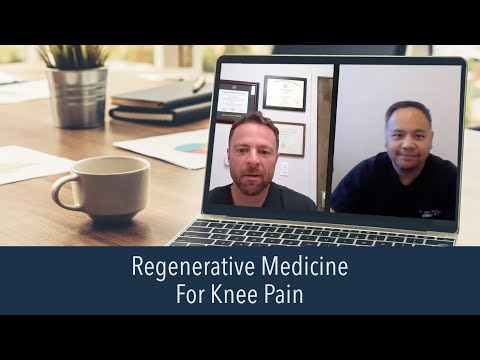
Regenerative medicine is a developing area of healthcare that examines how biologic therapies may support the body’s natural repair processes. These therapies are typically considered after a thorough evaluation and may be discussed alongside established treatments such as physical therapy, bracing, guided exercise, medication management, or surgical consultation when appropriate.
It is important for patients to maintain realistic expectations. While some individuals experience functional improvement, outcomes vary based on factors such as age, activity level, severity of joint damage, and overall health.’s take a closer look at some of our regenerative medicine treatments for knee pain near Royal Oak, MI, and how they can help you find relief from knee pain.
Ask About Alternatives to Surgery for Your Chronic Pain
Contact the Michigan Center for Regenerative Medicine Today and Schedule Your Office Visit
Platelet-Rich Plasma (PRP) Therapy
Platelet-rich plasma therapy uses a concentrated portion of a patient’s own blood that contains platelets and signaling proteins. After processing the sample in a centrifuge, the platelet-rich solution may be injected into targeted tissue under clinical guidance when deemed appropriate.
Researchers continue to study how platelet-derived growth factors influence tissue response. PRP is frequently discussed in connection with orthopedic and sports medicine care, particularly for patients seeking nonsurgical approaches.
Physicians may evaluate PRP for conditions such as:
- Mild to moderate osteoarthritis
- Meniscus irritation
- Ligament strain
- Tendon-related discomfort
- Early cartilage changes
Because PRP relies on biologic material from the patient, it is often performed in an outpatient setting. Still, candidacy must be determined through medical consultation.
Prolotherapy
Prolotherapy is another injection-based therapy that some providers consider for specific musculoskeletal concerns. It typically involves a dextrose-based solution intended to trigger a localized healing response.
As with all regenerative therapies, scientific understanding continues to evolve. Some patients report symptom improvement, while others may require alternative treatments. A thorough diagnostic process helps determine whether prolotherapy fits within a broader care plan.
Prolotherapy may be discussed in cases involving:
- Joint instability
- Ligament irritation
- Tendon injuries
- Chronic knee discomfort
Your physician will review potential risks, benefits, and alternatives before recommending any procedure.
The Value of Conservative Care
Not every patient requires an injection-based therapy. Many individuals benefit from first-line treatments such as:
- Structured physical therapy
- Strength and mobility training
- Weight management strategies
- Activity modification
- Supportive bracing
- Anti-inflammatory guidance from a physician
These approaches often play an essential role in long-term joint health, whether used alone or alongside more advanced treatments.
Comprehensive Evaluation Matters
Knee pain is rarely identical from one patient to another. During your consultation, our physicians may review:
- Medical history
- Prior injuries
- Imaging studies
- Movement patterns
- Occupational demands
- Lifestyle factors
This whole-person approach helps ensure recommendations are medically appropriate rather than standardized.
We encourage patients to ask questions and participate actively in treatment decisions. Understanding your options can reduce uncertainty and help you move forward with confidence.
When to Seek Medical Guidance
Consider scheduling an evaluation if you experience:
- Persistent swelling
- Reduced range of motion
- Pain during weight-bearing activities
- Knee instability
- Symptoms that do not improve with rest
Early assessment can sometimes prevent further joint stress and expand available treatment options.
A Patient-First Approach to Knee Care
Michigan Center for Regenerative Medicine is committed to ethical medical practices, patient safety, and ongoing education. Regenerative medicine continues to evolve, and our team remains attentive to emerging research so recommendations reflect current clinical understanding.
Our goal is not simply to offer procedures but to help patients better understand their condition and the full spectrum of care available.


Schedule Your Consultation for Treatment for Knee Pain Near Royal Oak, MI
If knee discomfort is limiting your mobility or interfering with activities you enjoy, professional evaluation can provide clarity and direction.
Michigan Center for Regenerative Medicine
355 Barclay Circle, Suite A
Rochester Hills, MI 48307
Call (248) 216-1008 to schedule your consultation and learn more about your options for treatment for knee pain near Royal Oak, MI. Our team is dedicated to delivering thoughtful, individualized care designed to support long-term joint function and overall wellness.


Take Advantage of New Advancements in Regenerative Medicine Provided by Board-certified Doctors
Contact Michigan Center for Regenerative Medicine Today and Discover If You are a Candidate. Home Office and Medical Center located at 355 Barclay Cir Suite A Rochester Hills, MI 48307
- Treatment for Knee Pain Near Troy, MI
- Treatment for Knee Pain Near Rochester, MI
- Treatment for Knee Pain Rochester Hills, MI
- Treatment for Knee Pain Near West Bloomfield, MI
- Treatment for Knee Pain Birmingham, MI
- Treatment for Knee Pain Farmington, MI
- Treatment for Knee Pain Near Berkley, MI
- Treatment for Knee Pain Near Clawson, MI
- Treatment for Knee Pain Near Beverly Hills, MI
- Treatment for Knee Pain Near Farmington Hills, MI
- Treatment for Knee Pain Northville, MI
- Treatment for Knee Pain near Wixom, MI
- Treatment for Knee Pain Pleasant Ridge, MI
- Treatment for Knee Pain near Pontiac, MI
- Treatment for Knee Pain near Bloomfield Hills, MI
- Treatment for Knee Pain near Auburn Hills, MI